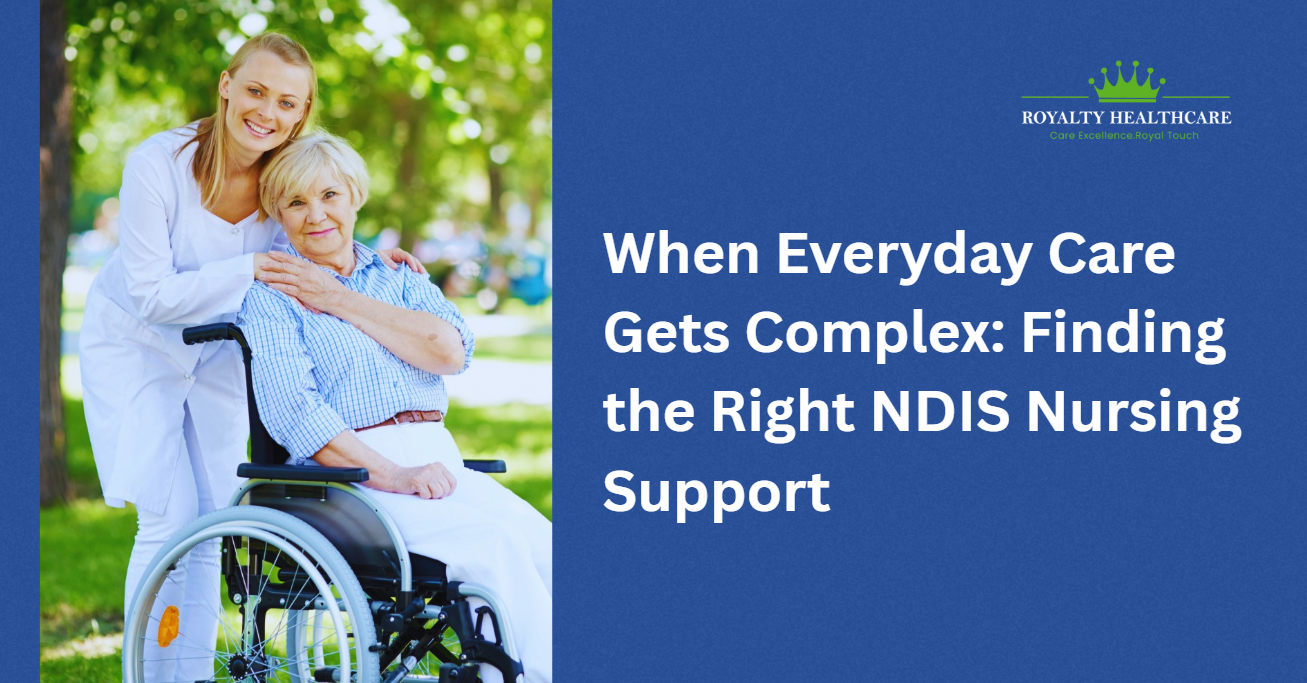
Living at home can provide comfort, familiarity, privacy and control. For people with disability who also have complex health needs, remaining at home may require skilled nursing support that is safe, respectful and tailored to the individual.
NDIS nursing support can help participants manage certain disability-related health needs at home or in the community. Its purpose is not to make daily life feel clinical. It is to ensure necessary care is delivered in a way that protects dignity, independence and personal choice.
Quality nursing support should always begin with the person, not the procedure.
Why Nursing Support Can Be Essential
Some participants require more than general assistance with daily activities. They may need clinical monitoring, complex health support or procedures that must be completed by a suitably qualified nurse.
For people looking for NDIS Nursing Services Brisbane, effective care should fit around the participant’s routine, communication style and goals. A nurse may provide support at home, during community activities or as part of a broader team involving support workers, family members and healthcare professionals.
What Disability Nursing May Include
The support required will depend on the participant’s assessed needs, NDIS plan and current funding rules. Nursing support may include:
- Wound care and pressure injury management where ongoing disability-related support is required.
- Medication support or oversight within the nurse’s professional scope and the participant’s care plan.
- Continence support, including assistance with relevant routines and clinical requirements.
- Enteral feeding support for participants who require tube feeding and related care.
- Catheter care delivered according to appropriate procedures and individual instructions.
- Monitoring relevant health indicators and identifying changes that may require escalation.
- Developing or reviewing clinical care instructions for workers involved in the participant’s support.
Not every participant will need all these services. Some health needs may be funded through the mainstream healthcare system rather than the NDIS. A provider should explain these boundaries clearly instead of making assumptions about what a plan will cover.
The Difference Between Clinical and Person-Centred Care
Clinical competence is essential, but it is only one part of quality disability nursing.
A nurse may perform a procedure correctly, yet the participant’s experience can still be poor if communication is rushed, choices are ignored or the person is treated like a task.
Strong NDIS nursing providers Brisbane should combine clinical knowledge with empathy, patience and respectful communication. Participants should be told what is happening in language they understand. Their consent, privacy and preferences should be respected throughout the service.
Where appropriate, family members and support workers may also need clear instructions. This helps everyone understand their responsibilities and know when a concern should be reported or escalated.
What to Look for in a Nursing Provider
Choosing a provider requires careful consideration because nursing support can affect both safety and quality of life. Important qualities include:
- Qualified and registered nurses with experience relevant to the participant’s needs.
- Individual care planning based on health requirements, routines and personal preferences.
- Clear communication about procedures, responsibilities, documentation and changes in condition.
- Respect for dignity, privacy, culture, communication needs and personal choice.
- Accurate records and reliable handovers across the support team.
- Responsive systems for reporting concerns, reviewing risks and escalating changes.
- A collaborative approach involving the participant and, with consent, relevant family members and professionals.
Understanding NDIS and Mainstream Health Responsibilities
The NDIS does not replace Australia’s healthcare system. It may fund some disability-related health supports when they meet current requirements, but general medical treatment, hospital care and services ordinarily provided by the health system remain outside the NDIS.
This distinction matters when comparing NDIS nursing providers. A participant may receive disability-related nursing support at home while continuing to see a GP, specialist or hospital team for diagnosis and treatment.
A trustworthy provider should be transparent about what its nursing service covers. It should avoid promising that every clinical service can be claimed through an NDIS plan.
Where responsibilities are unclear, participants may need to speak with their plan manager, support coordinator, healthcare team or the NDIA. Clear advice at the beginning can prevent confusion, unexpected costs and interruptions to care.
Why Continuity Matters
Regularly meeting new nurses can be stressful for participants with complex needs. Each person may need time to understand communication preferences, routines, equipment, risks and individual signs that something may be wrong.
Continuity creates familiarity and trust. A nurse who knows the participant may be better able to deliver established care calmly and consistently.
Good continuity also depends on strong documentation. When the same nurse cannot attend, detailed records and effective handovers help another professional understand what has happened and what requires attention.
Consistency can reduce repeated explanations for participants and families while supporting safer, more coordinated care.
Nursing Support Through Royalty Healthcare
Royalty Healthcare provides disability support services across Brisbane and surrounding communities, including community nursing and assistance for participants with complex support needs.
Its nursing support can be planned around the participant’s wider goals and daily routine. This means looking beyond the immediate clinical requirement and understanding how support can help the person remain comfortable, connected and involved in decisions.
Participants may require other services alongside nursing care. A provider that understands broader disability support may help create a more coordinated experience, provided every service is appropriate to the participant’s plan and chosen by them.
The right provider should understand the participant’s needs before services begin, communicate openly, establish clear care arrangements and review support when circumstances change.
Questions to Ask Before Starting Nursing Support
Before choosing a nursing provider, participants and families may ask:
- What qualifications, registrations and relevant experience do your nurses have?
- How will you assess and document the participant’s nursing needs?
- Have your nurses supported people with similar health requirements?
- How do you respond when a participant’s condition changes?
- Will the participant receive consistent nurses whenever possible?
- How are care instructions shared with workers and family members?
- What happens if the scheduled nurse is unavailable?
- How do you protect privacy, dignity, consent and choice?
Clear answers can help participants compare providers and decide whether the service feels professional, transparent and person-centred.
Care That Respects the Life Behind the Support
Nursing care can involve procedures, equipment, clinical records and risk management, but the participant should never be reduced to their health needs.
They may want to remain living with family, build independence, attend community activities or feel more comfortable at home. Nursing support should help make those goals more achievable.
The most effective care combines professional skill with human understanding. It recognises that participants have their own routines, personalities, values and preferences.
Choosing nursing support is therefore about more than finding someone who can complete a clinical task. It is about finding a provider that delivers care safely while respecting the participant’s voice and the life they want to lead.
It should support safety without taking control away from the person receiving daily care.
When participants feel listened to, informed and included, nursing support can become a source of stability rather than disruption. That is where quality disability nursing makes its greatest difference.